
Missing a tooth can make you self-conscious about your smile and turn enjoying your favorite local meals into a challenge. Fortunately, modern dental technology offers a permanent, life-changing solution. At Schaefer Dental Group, we help patients regain their confidence, bite force, and oral health every day using state-of-the-art implant dentistry.
Whether you are a regular commuter down West St. Joseph Highway or live in the quiet neighborhoods near Waverly, finding the right “dental implants near me” starts with understanding your options.
Below, we break down the different types of dental implants available at our Lansing, MI practice and how to choose the right path for your smile.
What is a Dental Implant?
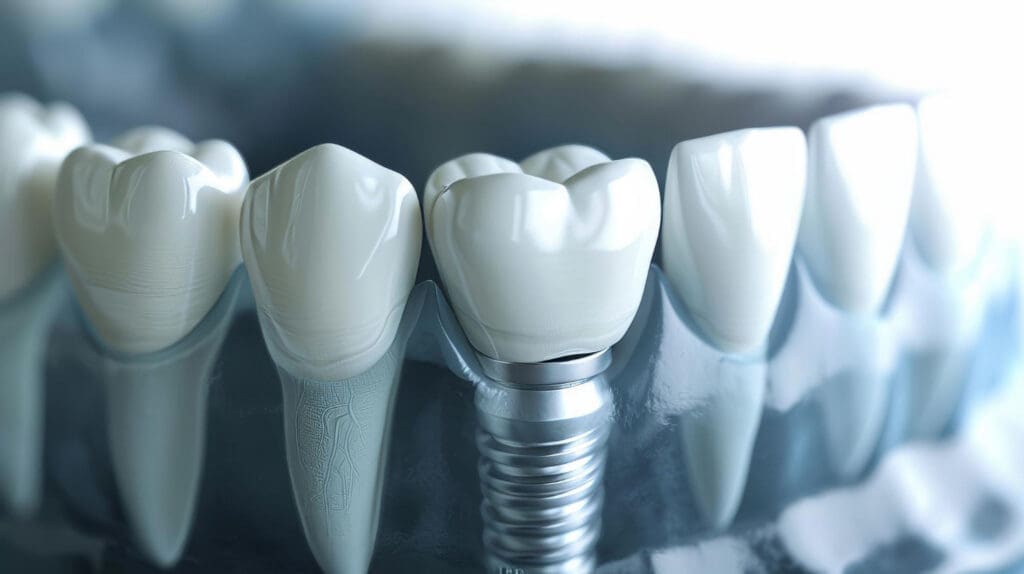
Before diving into the types, it helps to understand what an implant actually is. A dental implant is a small titanium post that acts as a prosthetic root for a missing tooth. Through a natural process called osseointegration (where the jawbone naturally bonds with the titanium post), the implant becomes a permanent part of your anatomy.
Once healed, this anchor is capped with a custom-crafted crown, bridge, or denture, giving you a replacement tooth that looks, feels, and functions exactly like a natural one.
The Main Types of Dental Implants We Offer
No two smiles are identical. Our experienced Lansing dental team evaluates your unique bone structure and health goals to recommend one of three core configurations:
1. Single Tooth Dental Implants
If you are missing just one tooth due to an accident or a severe cavity, a single implant is the gold standard.
-
The Process: A single titanium post is placed into the jawbone, followed by a custom porcelain crown.
-
The Benefit: Unlike a traditional dental bridge, a single implant replaces the missing root without needing to grind down or alter the healthy adjacent teeth.
2. Implant-Supported Bridges (Multiple Teeth)
If you are missing several teeth in a row, you do not necessarily need an implant post for every single gap. An implant-supported bridge bridges the gap efficiently.
-
The Process: Two implants are placed at either end of the gap, anchoring a series of connected life-like porcelain crowns in the middle.
-
The Benefit: This provides maximum stability for multiple teeth while remaining cost-effective and conserving natural bone structure.
3. All-on-4® and Implant-Supported Dentures
For patients who are missing an entire arch of teeth (top, bottom, or both), traditional floating dentures can be frustrating. They slip, cause sore spots, and require messy adhesives.
-
The Process: Using the innovative All-on-4 technique, we can secure a full, permanent set of upper or lower teeth using just four strategically placed titanium implants.
-
The Benefit: You achieve complete stability. You can eat crunchy foods again, speak clearly without fear of slipping, and prevent the facial “sunken” look associated with bone loss.
Anatomy of an Implant: Understanding the Placement
Depending on the health and thickness of your jawbone, implants can be categorized by how they interact with the bone structure:
-
Endosteal Implants (In the Bone): This is the most common variety used at Schaefer Dental Group. These screws are placed directly into the jawbone. They require a healthy, dense bone foundation to heal correctly.
-
Subperiosteal Implants (On top of the Bone): For patients who have suffered bone loss and do not wish to undergo a bone grafting procedure, a subperiosteal implant sits on top of the jawbone but under the gum tissue. (Note: Our doctors will thoroughly evaluate your bone volume using advanced digital imaging to determine if a bone graft or alternative implant style is best for you).
Common Patient Questions: What to Expect
How long does the dental implant process take?
Patients frequently ask us, “How long does it take to get a dental implant from start to finish?” The entire timeline typically spans 3 to 6 months. This length of time is necessary because the jawbone requires a few months to fully integrate with the titanium post before we can safely attach your final, permanent crown.
Are dental implants painful?
The surgical placement is performed under local anesthesia, meaning you won’t feel a thing during the procedure. Most patients share first-hand that the recovery process feels very similar to a standard tooth extraction, with minor soreness manageable by over-the-counter pain relievers for just a few days.
Urgent Needs? Emergency Dentist Services in Lansing
While dental implants are a planned restorative procedure, sudden oral injuries can happen while playing sports at Sharp Park or driving through town. If you experience a knocked-out tooth, a severe fracture, or a sudden, unbearable jaw pain, we provide immediate emergency dentist treatments.
Seeking immediate care for a broken tooth can often mean the difference between saving your natural tooth or needing an extraction and future implant. We prioritize urgent cases to provide rapid toothache relief when you need it most.
A Local Dental Team You Can Trust
At Schaefer Dental Group, we take pride in being a true pillar of the Lansing community. From volunteering at local health drives to supporting regional family events, our goal is to build deep, lasting community trust. We combine our years of clinical expertise with a warm, welcoming environment so that your restorative journey feels stress-free.
Seasonal Checklist: Achieve Your Smile Goals
With the New Year around the corner or summer vacations approaching, there is never a bad time to prioritize your health. Replacing missing teeth doesn’t just improve your look—it keeps your remaining teeth from shifting out of place, protecting your bite alignment for years to come.
Schedule Your Consultation Today!
Are you ready to stop hiding your smile and start chewing with confidence again? Let our compassionate Lansing team design a personalized implant solution tailored perfectly to your lifestyle.


